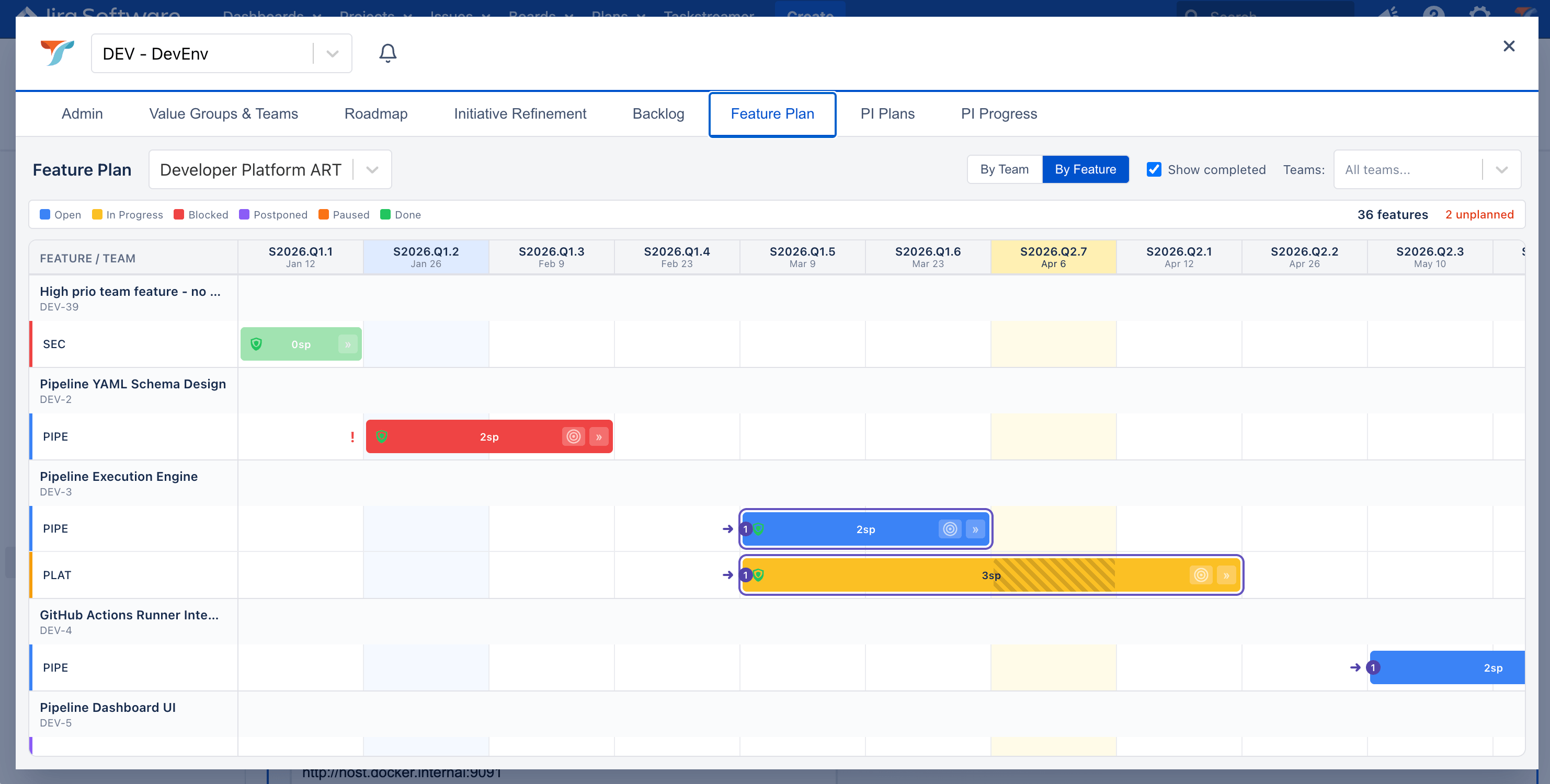
Set priority, dependencies, and team capacity. The engine calculates the feature plan in milliseconds and keeps the roadmap honest as reality shifts. Runs in Jira. Runs in Conductor. Same math either way.
Teams don't learn a new tool. They get automatic planning for free, right where they already ship from.
A widget on every feature for fast data entry. A modal for configuration, Roadmap, Backlog, Feature Plan, PI Plan, and PI Progress. No separate login. No data sync. No context switching.
Teams delivering with AI-governed execution get the same Planning experience inside Conductor. Same widget, same modal, same self-updating plan. The calculation engine doesn't care which environment teams live in.
Priority. Dependencies. Team capacity. Three inputs. The engine sequences features across sprints, respects every dependency and every blocked item, and rewrites the plan in milliseconds.
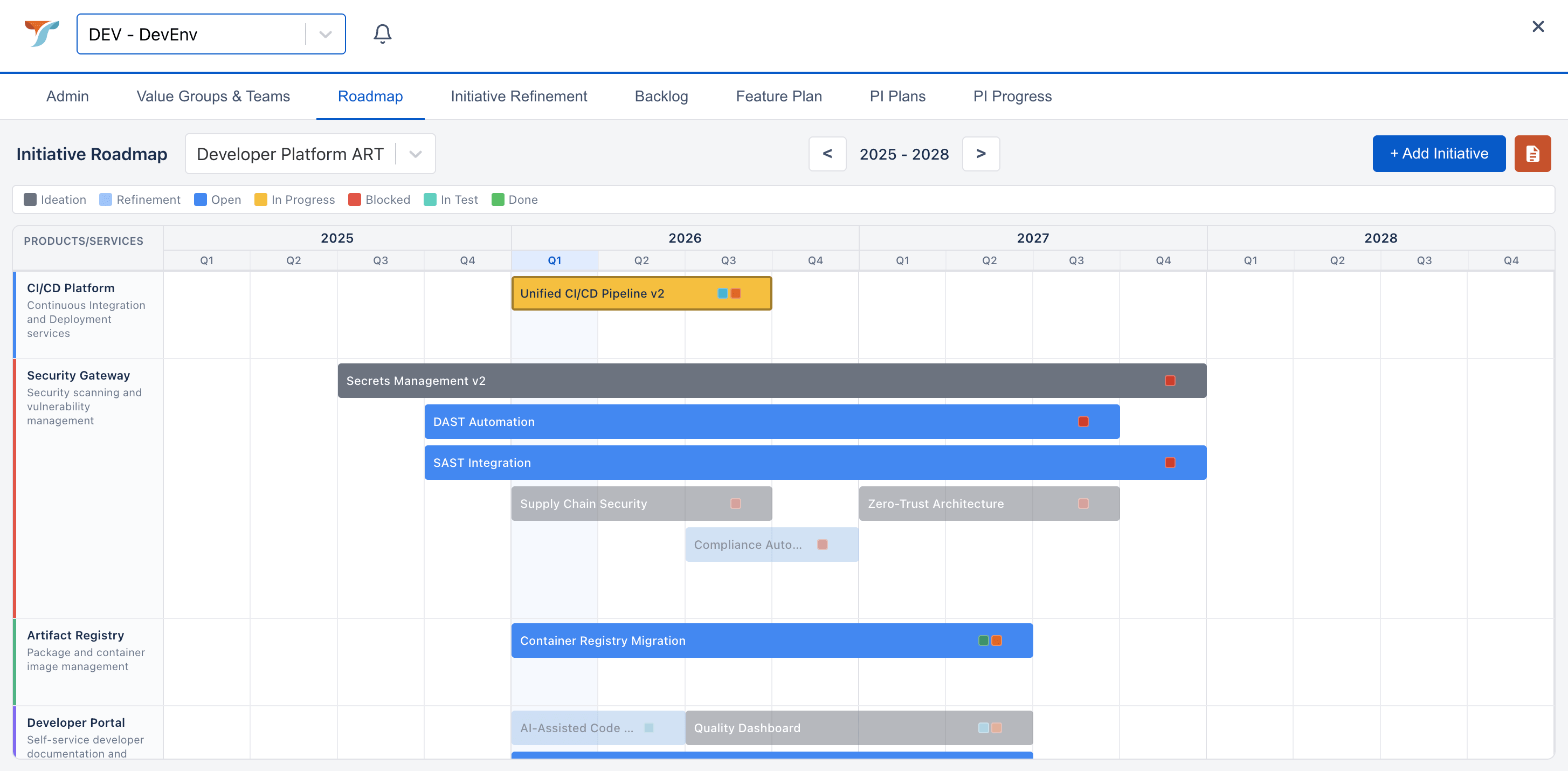
You don't build the roadmap. The roadmap emerges from the feature plan.
Define objectives per quarter. Refine each with What (are we trying to achieve), How (do we achieve it), and a Feature Plan. The roadmap is the aggregate. Built from the features, not imposed on them.
Lock the feature map for fully automated roadmap updates driven purely by execution state. Or leave it open for agile freedom, with the calculation engine running in the background either way.
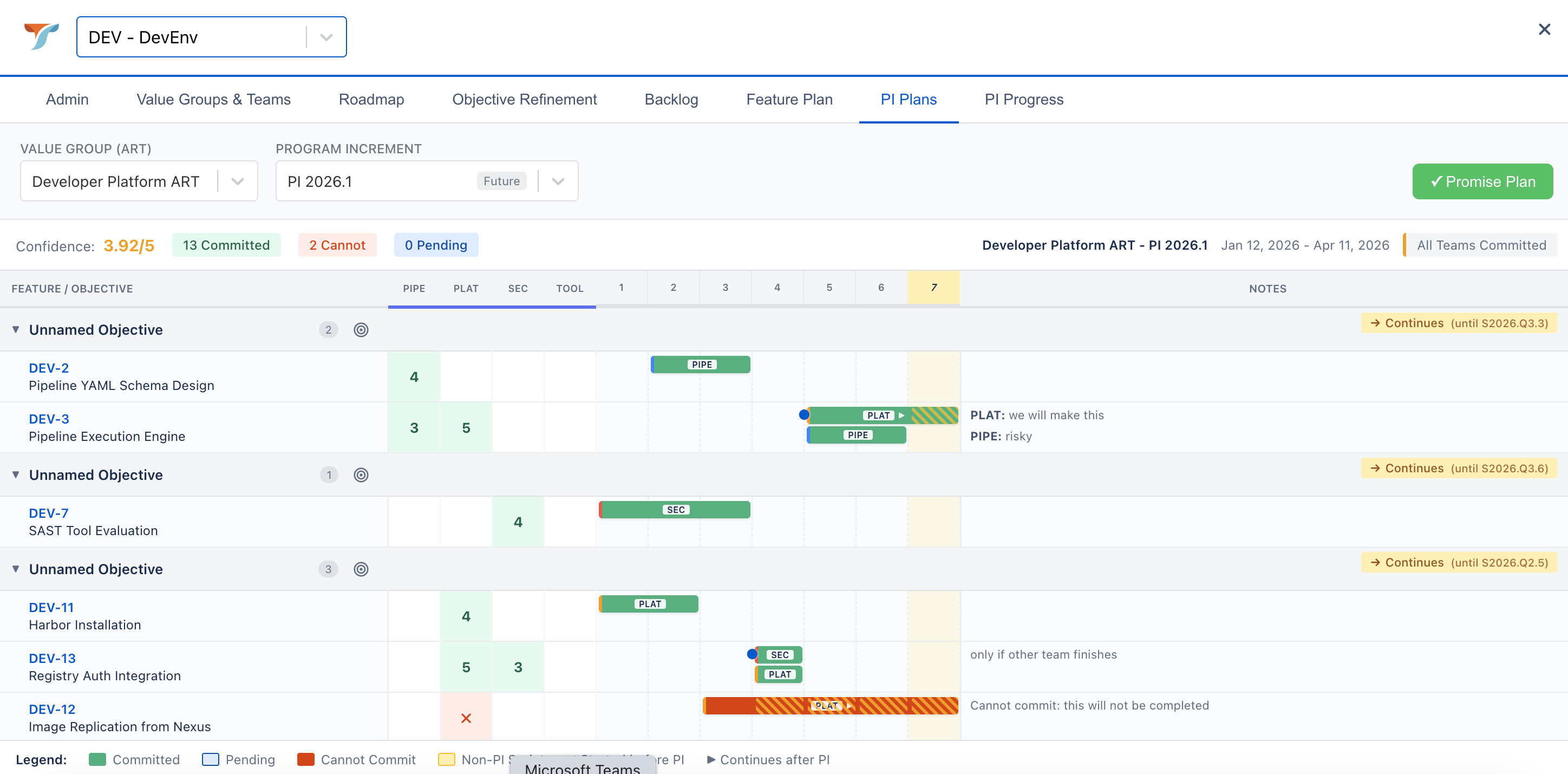
Commit what you can defend. Track what actually ships.
Teams cast a confidence vote on every commitment. One rolled-up score tells leadership whether the plan is real before anyone ships a line of code.
When reality drifts, ghost items keep the original promise visible alongside actual delivery. Expected delivery percentage recalculates every sprint, so the honest number is always on screen.
From install to autopilot. The arc most teams run through in their first month with Planning.
Thirty-minute demo. Your features. Your teams. Your priorities. Watch the calculation engine rewrite the plan in front of you.